reFuel.ch 5th Round Table Highlights Policy, Investment, and Technology Challenges for Sustainable Fuels
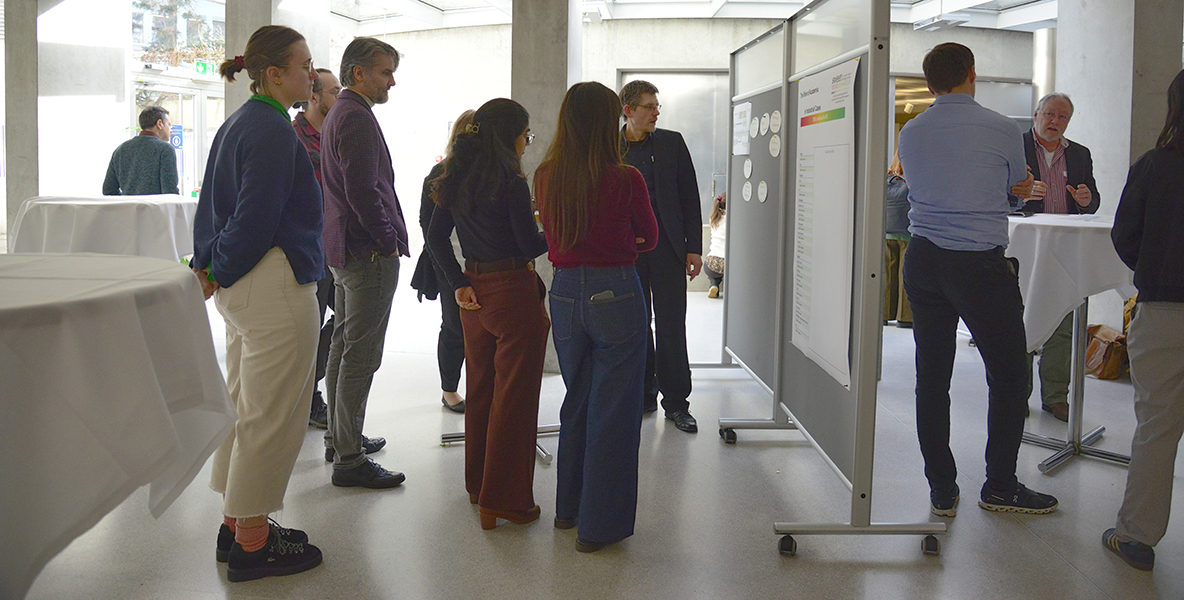
The meeting gathered approximately 30 representatives from the public and private sectors and 40 researchers from the SWEET Consortium, creating a dynamic platform for exchange between academia, industry, and policy stakeholders.
Following an inspiring keynote by Transport & Environment, participants engaged in lively discussions on current and future challenges across the sustainable fuels landscape. Interactive “market stall” sessions invited deeper dialogue among participants, strengthening the link between innovation, regulation, and real-world application.
A key topic was pyrolysis technology, which is considered one of the most dynamic and rapidly evolving fields, with several demonstration plants already operational worldwide. While both industry experts and representatives from the Swiss Federal Office of Energy (SFOE) acknowledge its potential, it is currently expected to play only a limited role in Switzerland’s future energy mix. Participants also addressed certification frameworks and the trading of Guarantees of Origin in emerging market hubs. Discussions spanned areas such as Power-to-X pathways, plastic and methane pyrolysis, fuel import challenges, synthetic fuels policy analysis, and country risk evaluation.
Financial aspects sparked particular interest. Despite promising technologies, high investment risks and mismatched contract durations continue to challenge market growth. Many participants emphasized the need for de-risking instruments such as Contracts for Difference.
Policy and geopolitical considerations added another layer to the dialogue. Reliance on fuel imports, Sustainable Aviation Fuel (SAF) mandates, and competition with sectors like road transport remain pressing issues. While biofuel startups may initially target less regulated markets, participants noted that a clear policy framework and stronger investment incentives will be essential for wider SAF adoption.
Finally, the discussions emphasized the indispensable role of science in driving industrial innovation. Academic institutions provide advanced analytical tools and robust modeling capabilities, delivering data-driven insights that inform decision-making from feasibility studies through to implementation. Their ability to act as neutral facilitators across these phases makes academic partners essential in accelerating the translation of innovation into industrial practice.
See the documentation of the 5th round talbe here: Link