Hydrogen Could Connect Oman and Switzerland
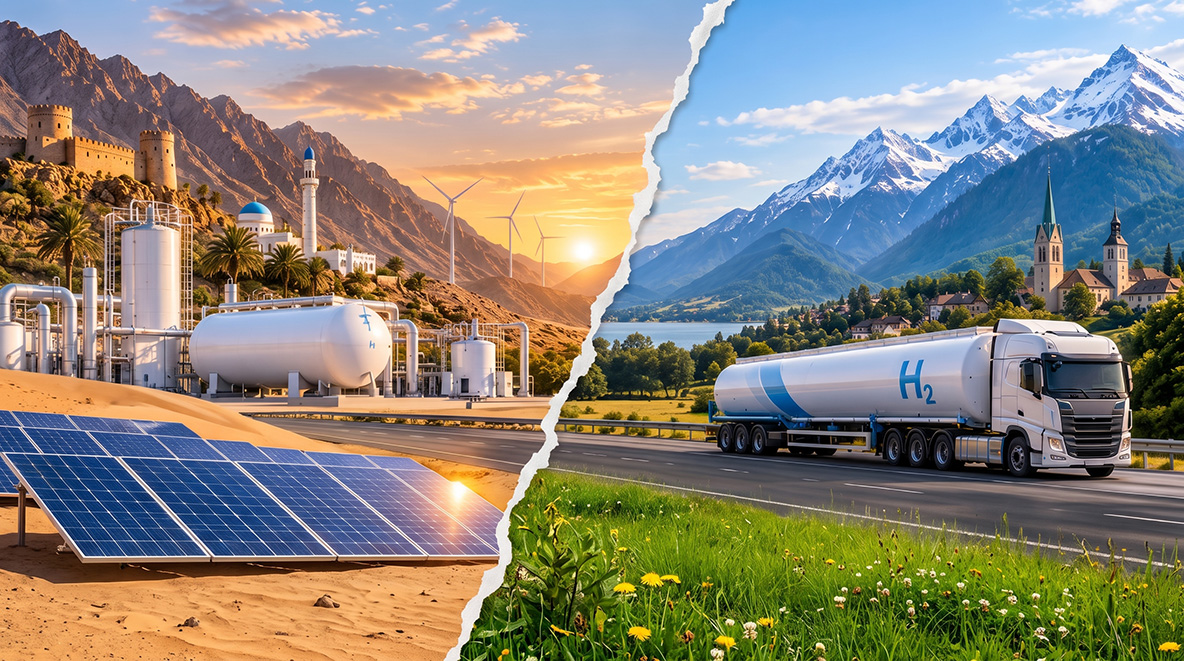
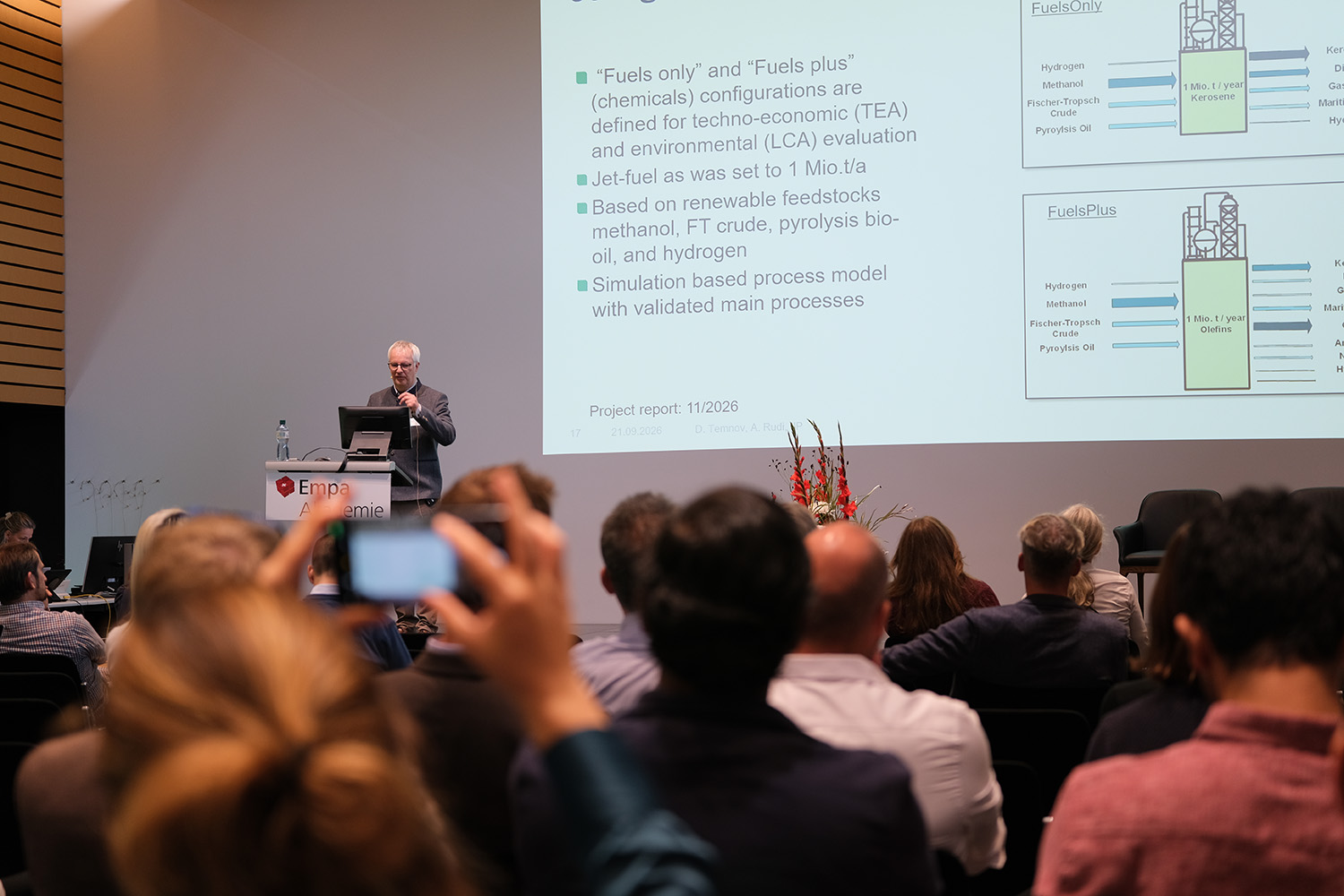
The workshop took place within the framework of a “Memorandum of Understanding” between the Omani Ministry of Energy and Minerals and the Swiss Federal Office of Energy. On the Swiss side, the exchange is closely linked to SWEET reFuel.ch. In addition to technical innovations, politics, regulation, sustainability, and cooperation with national and international stakeholders also play an important role. Oman is an interesting partner because, within the context of SWEET reFuel.ch, research is being conducted into how sustainable molecules could be produced on a large scale in the future and made available to help achieve Switzerland’s climate goals.
Key Findings and Presentations
Natural Hydrogen: What Lies Beneath Oman’s Soil
Ibrahim Al Sawafi, a geophysicist at Oman’s Ministry of Energy and Minerals and a doctoral candidate at the University of Geneva, provided insight into the topic of “white” or geological hydrogen. This refers to hydrogen formed underground through natural geological processes. Due to its unique geology, Oman offers promising conditions for researching such deposits.
Natural hydrogen could represent an additional source for the hydrogen supply in the long term. However, further exploration, research, and suitable regulatory frameworks are required before it can be utilized. Oman plans to open concession areas in the near future. This will create potential new opportunities for research partners and companies to jointly advance exploration, production, and subsequent utilization.
Liquid Hydrogen for Storage and Transport
Another presentation focused on liquid hydrogen (LH₂) and the question of how hydrogen can be transported over long distances. Paul Kiesow of Hytra highlighted the role that liquefaction and the corresponding transport infrastructure could play in future international hydrogen value chains. It became clear that liquidhydrogen is the only real option for transporting large quantities by ship, butat the same time it poses significant technical challenges in terms of liquefaction, storage, safety, and logistics. It is therefore crucial to consider the entire chain, from production to the end user.
More Efficient Hydrogen Liquefaction
A presentation by Dr. Amjad Riaz of Sultan Qaboos University addressed this issue. The focus was on ways to make hydrogen liquefaction processes more efficient and thereby reduce the energy required for them. The discussion revealed that there remains considerable potential for technological improvements in this area. However, new process concepts must not only prove themselves in the laboratory but also under realistic conditions and on an industrial scale.
A Swiss Hydrogen Ecosystem Is Taking Shape
Urs Cabalzar of H2 Energy turned his attention to the development of the hydrogen ecosystem in Switzerland and the lessons learned from existing applications. The value chain extends from the local production of renewable hydrogen through transportation and refueling stations to its use, for example, in heavy-duty transportation. A key insight from practical experience is the importance of system integration: Optimizing individual technologies is not enough to ensure a reliable hydrogen supply. Production, storage, transportation, refueling, and application must function technically and economically as an integrated system.
Hydrogen for the Decarbonization of Industry
Andreas Bittig from the Association for the Decarbonization of Industry used a Swiss example to illustrate the role hydrogen can play in decarbonizing industrial processes. The focus was on the microwave methane pyrolysis approach, in which hydrogen and solid carbon are extracted from methane. A pilot plant was built in close collaboration with Empa to supply the enameling furnace at V-Zug. This example also highlighted the importance of demonstration projects for technology transfer. They bridge the gap between research and industrial application, while also revealing the challenges that must be overcome in scaling up, financing, and technically implementing new processes.
Research on Hydrogen Storage at Empa
To conclude the technical program, Dr. Panayotis Dimopoulos Eggenschwiler, research group leader at Empa, presented work on the influence of size on the refueling of hydrogen pressure vessels. High-pressure storage tanks are a key component of many hydrogen applications and must simultaneously meet requirements for safety, weight, capacity, and cost-effectiveness.
Conclusion and Outlook
The discussion highlighted just how broad the spectrum of hydrogen applications is. In Oman, both renewable and natural hydrogen could open up new opportunities. At the same time, storage, liquefaction, and international transport remain key challenges. In Switzerland, meanwhile, operational experience with electrolysis, logistics, and industrial demonstration facilities demonstrates the technical and organizational prerequisites necessary for a functioning hydrogen value chain.
For SWEET reFuel.ch, this exchange fits into the overarching question of how renewable fuels and chemicals can be supplied to Switzerland via robust and sustainable pathways. The ongoing work takes into account not only production processes but also imports, transportation and storage options, as well as potential production sites and international partnerships.