3rd Annual Conference of the SWEET Consortium reFuel.ch Highlights Implementation Pathways for Sustainable Fuels
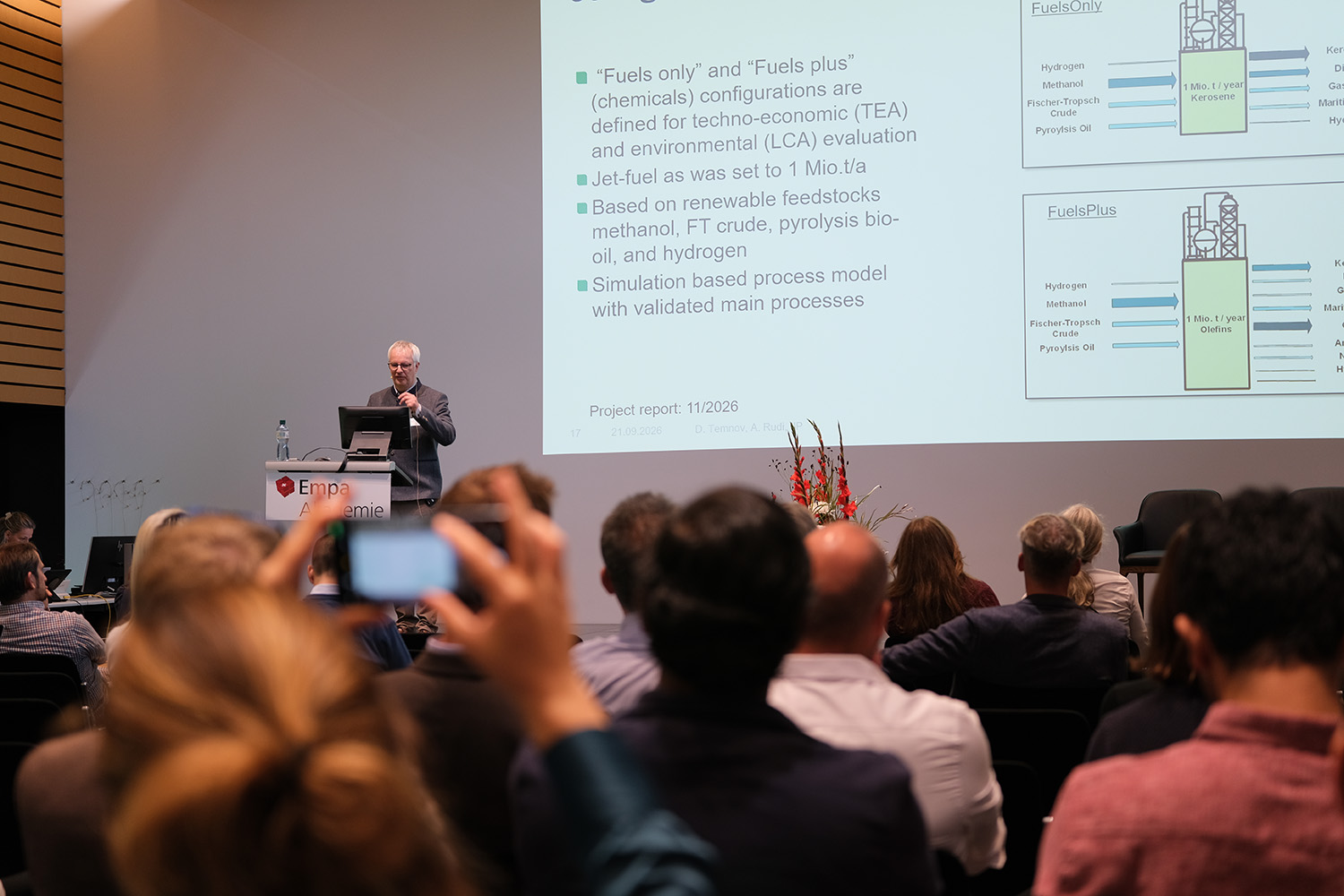
The morning session addressed the regulatory and policy landscapes shaping sustainable fuel deployment.
Swiss Policy and International Legal Frameworks
- Swiss Policy Analysis: Paula Castro (ZHAW) presented an overview of the Swiss legal and policy space for Sustainable Fuels and Platform Chemicals (SFPC) markets, with a focus on Sustainable Aviation Fuels (SAF). She outlined key market failures—including negative externalities, innovation spillovers, coordination failures, and information asymmetries—and evaluated remaining policy gaps. Download the presentation here.
- Assessment of International Policies: Anna Panarella (USI) highlighted that international law offers more space for designing SAF support policies than commonly assumed. She warned that weakening ambitions could impede investment and emphasized flexible economic instruments like Contracts for Difference (CfDs). Regionally, Switzerland could either align fully with EU regulations to benefit from integration into the European SAF market or position itself as a complementary, cost-competitive destination for SAF imports. Download the presentation here.
Domestic SAF Supply Chains and Policy Insights
- Logistics & Facility Allocation: Viola Rühlin (ZHAW) analyzed domestic SAF production logistics in Switzerland. Her model demonstrated that establishing a single production facility is preferable to a distributed multi-site setup, noting that conditioning, handling, and storage costs must be evaluated alongside transport expenses. Download the presentation here.
- Panel Discussion (WP1–WP3): Consortium co-lead Regina Betz (ZHAW) moderated a synthesis discussion linking regulatory, economic, and supply chain findings. Download the presentation here.
- Case Presentation: Christian Bach (Empa) concluded the morning presentations by sharing practical industry context. Download the presentation here.
Following a lunch break accompanied by an interactive poster session where attendees engaged directly with project researchers, the conference reconvened for the afternoon program. The afternoon session opened with a keynote address on future refinery concepts, followed by a presentation about broader biomass utilization:
Biomass Potential and Green Refineries
- Integrated Concepts for Future Green Refineries: Nicolaus Dahmen (KIT) kicked off the afternoon program with a keynote outlining scalable concept designs for green refinery infrastructure. He highlighted that refineries are highly specialised industrial systems and therefore difficult to adapt to new processes. A key question for the transition towards sustainable fuels is whether future production should rely on large, centralised refineries or a network of smaller, decentralised facilities with specialised processes tailored to local resources and needs.
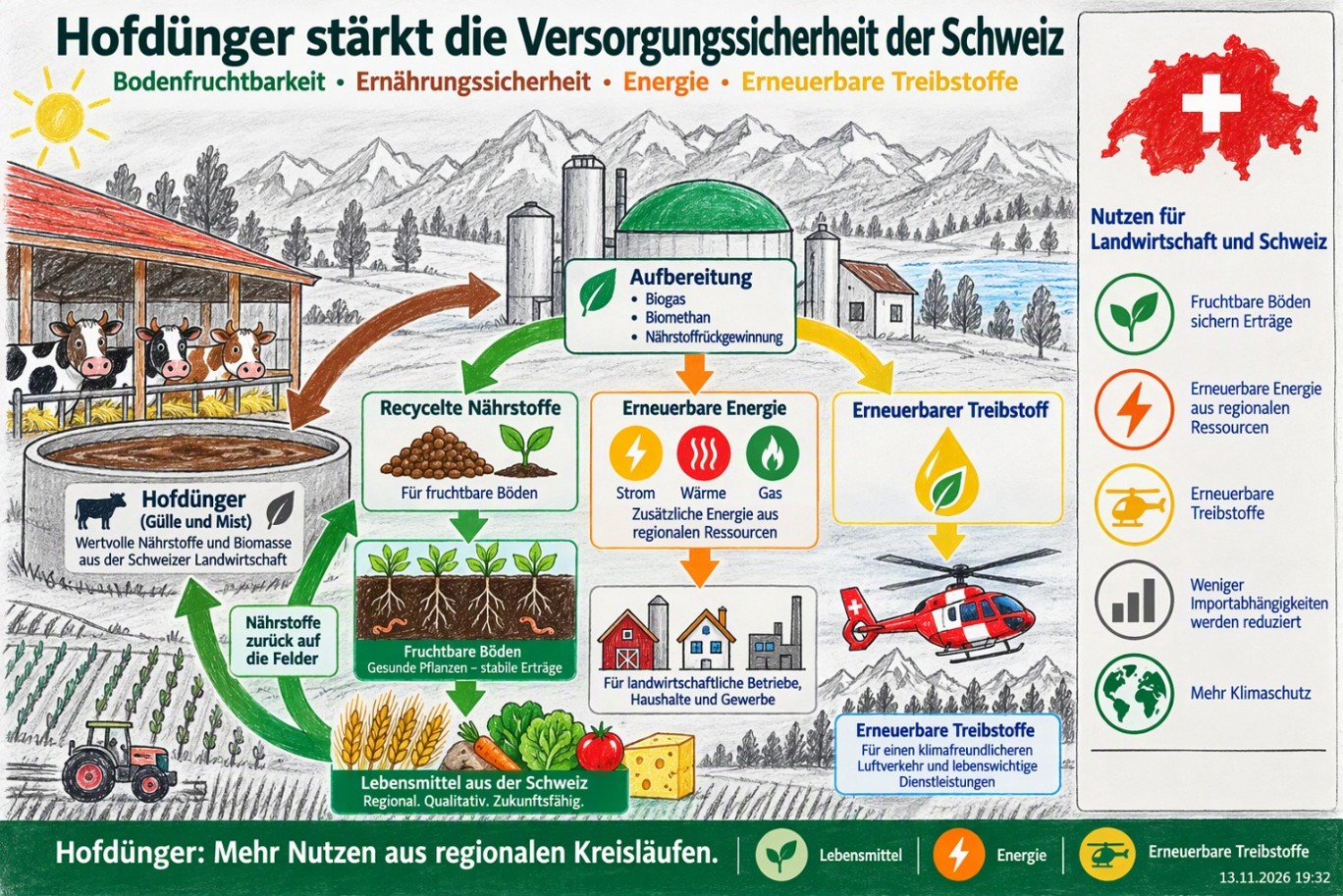
- Unlocking Manure's Biogas Potential: Sandrine Werner (ETHZ) presented a Swiss case study on manure as an underused bioenergy resource. While Swiss livestock generates 24 million tons of fresh manure annually (~48 PJ of theoretical primary energy), only ~5% is currently harnessed for energy, despite contributing ~16% of agricultural greenhouse gas emissions. Transitioning manure to energy pathways reduces climate impact by 26–36% compared to direct field application. Download the presentation here.
Following a networking coffee break, the final session showcased technical breakthroughs across several reFuel.ch work packages.
Technological Innovations in Lab-Scale Pathways
- CO₂ Electrolysis (WP4): Claudia Bissattini Alessi (Empa) presented findings from Empa, PSI, and EPFL on catalyst layer stability. Their work show continuous electrolysis reaches a selectivity plateau, whereas pulsing at 0.50 V regenerates local pH and yields a five-fold improvement in CO selectivity. Machine learning applications for gas diffusion electrodes (GDEs) and novel bipolar membrane developments were also highlighted. Download the presentation here.
- Green Methanol Synthesis (WP5): Riccardo Puragliesi (SUPSI) presented the reFuel.ch Toolbox (developed with industry partner Casale) for flexible CO₂-to-methanol conversion. The toolbox combines a material properties database with process-system evaluations to optimize methanol as an adaptable energy carrier and platform chemical. Download thepresentation here.
- Oligomerization of Olefins (WP7): Andreas Borgschulte (Empa) detailed advancements in converting methanol to sustainable fuels. Addressing reactor heat control in gas-phase operations, researcher Alessia Cesarini identified a liquid-reaction mechanism—dissolving olefins in hexane under high pressure—to improve heat transport, provide intrinsic temperature control, and minimize coking. Download the presentation here.
Looking Ahead
In her closing remarks, co-consortium lead Regina Betz (ZHAW) previewed the upcoming, invite-only reFuel.ch Round Table on November 10, which will focus on Renewable (Platform) Chemicals and Reserve Power Plants. She also called on early-career researchers to contribute to the Energy Talks in Disentis in January 2027.
The organizational team would like to extend a warm thank you to all participants for the lively discussions, thoughtful questions, and valuable exchanges throughout the day. To stay updated on future events, research progress, and consortium updates, make sure to follow us on LinkedIn and subscribe to our newsletter.